
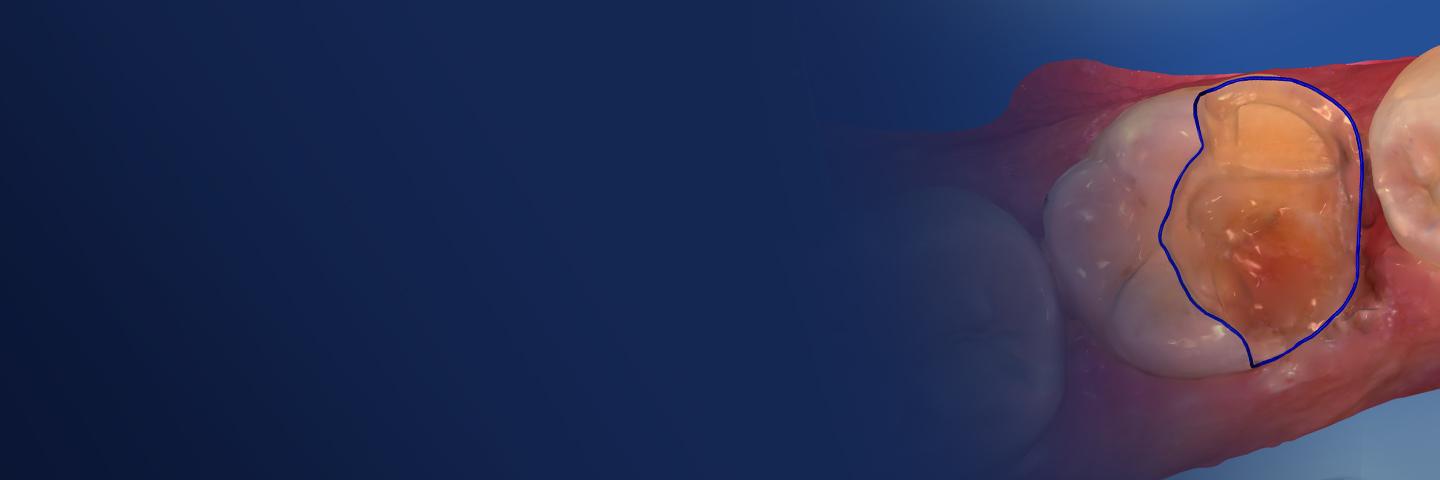
Modern Prep Design and Margination
You cut a modern e.max prep, scan it, and the auto margin lands halfway up a fuzzy shoulder. Ahmad Al-Hassiny walks the thickness rules the ceramic needs, the calls you make on cusps, cores and root-treated teeth, and margination in CEREC and TRIOS. One chapter, six lessons, 32 minutes, 1 CPD/CE hour.

You cut a modern e.max prep, scan it, and the auto margin lands halfway up a fuzzy shoulder. Or the crown seats, and the interproximal comes back open.
Dental school taught deep, sub-gingival preparations for PFMs; the modern milled ceramic wants less tooth off, a margin the software can trust, and a bond to enamel that lasts.
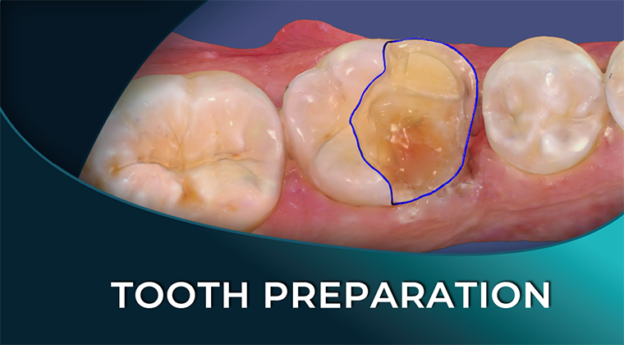
By the end of this course you should be able to prepare a posterior tooth for a modern milled ceramic that respects the material, keep the margin high and dry so resin bonding works, and marginate the scan in CEREC or TRIOS with the software’s help.
Dr. Ahmad Al-Hassiny walks the modern prep, the ceramic thickness rules, the calls you make case by case on cusps, cracks, root-treated teeth and abfractions, and the two demonstrations that show margination is the same job in every CAD system.
He recorded this in May 2022. All the information and processes are still clinically relevant; just the parts and prices are from then.
One chapter and six lessons, 32 minutes of lecture, with a ten-question quiz at the end.
What you will learn
- The e.max clinical guidelines you will use on nearly every prep, 1.5 millimeters occlusally and 1 millimeter at the margin for a full-coverage crown, and 1 millimeter throughout for an occlusal veneer
- The modern high-and-dry margin, and why it is more conservative and easier to bond than the equigingival PFM prep dental school taught
- When to cover the cusps, when to leave them, and when to place a core
- Root-treated posterior teeth and the six-fold drop in extraction Ahmad quotes from the research
- Abfractions and why you stay on the enamel, and why the dentine bond drops 40 percent in 6 to 12 months
- Shoulder margins, and why a chamfer or a knife-edge does not survive a milled ceramic
- Auto-margination in CEREC and TRIOS, and the sweeping correction that gives you a line you can trust
1 CPD/CE hour, assessed by a ten-question quiz with an 80 percent pass mark and unlimited attempts.
You get lifetime access, updates included.
Written for dentists doing their own CAD/CAM crowns and onlays, and for dentists sending scans to a lab who want the prep and the margin to give the technician a fighting chance.
It does not cover the full-arch workflow, the material families and processing after the mill, or the CEREC administration and design software in detail. For those there are the free Getting Started with Digital Dentistry as the foundation, Ahmad’s Perfect Ceramic Processing for sprues, crystallization and glaze, Dr. Tony Mennito’s Bonding – Everything You Need to Know as the natural next step, and Ahmad’s CEREC Clinical Workflows inside CEREC Same-Day Excellence for the whole in-house CEREC workflow.
Course Content
About Instructor

Course Includes
- 1 Chapter
- 6 Lessons
- 1 Quiz
- Course Certificate
Ratings and Reviews



 Yehia Awad
I really learned all the possible cases that i can use onlay or inlay or even occlusal veneers to conserve tooth structure because this is a serious problem some patients come to me with a previous crown restoration and unfortunately the preparation is not conservative so i have to rebuild the tooth again with post and core with much longer hours with the patient especially because of the rootcan




minutely guided and instructed workflow.